
The majority of the population of Cyprus is comprised of two main ethnic groups: Greek Cypriots and Turkish Cypriots. Most of the island residents (about 80%) — Greek Cypriots — are descendents of the Achaeans and the Mycenaeans, who came to Cyprus in circa 2000 BC. Just like any other nationality, Greek Cypriots possess their own unique mentality and socio-cultural traditions. In this article we will talk about the Cypriot lifestyle, including the ways that Cypriots celebrate their birthdays, baptisms and other holidays.
Cypriot mentality
Greek Cypriots take work and rest very seriously. Some say that Cypriots are known for being organized, meticulous and very responsible when it comes to work. At the same time, it is no secret that Cypriots also love cooking and eating, listening to music and dancing.
Tourists who have visited Cyprus may have noticed that Cypriots are very social, emotionally expressive and outgoing people. Loud talking and laughing, striking up a conversation with a stranger, offering help or advice — are all considered part of normal social etiquette. Cypriot women often choose to stay at home and take care of their families.
Cypriots love planning their holidays. Big celebrations take a lot of preparation and reflect Cypriot hospitality.
Baptisms
Baptism is probably the second most important family holiday (with weddings being the first, at least in religious families). Godparents are chosen from the closest circle of friends and relatives shortly after the child is born. Cypriots believe that exactly after his/her Baptism the child is assigned a Guardian Angel, who will protect him/her for the rest of his/her life. It is no wonder that most families begin preparing for this event months in advance.
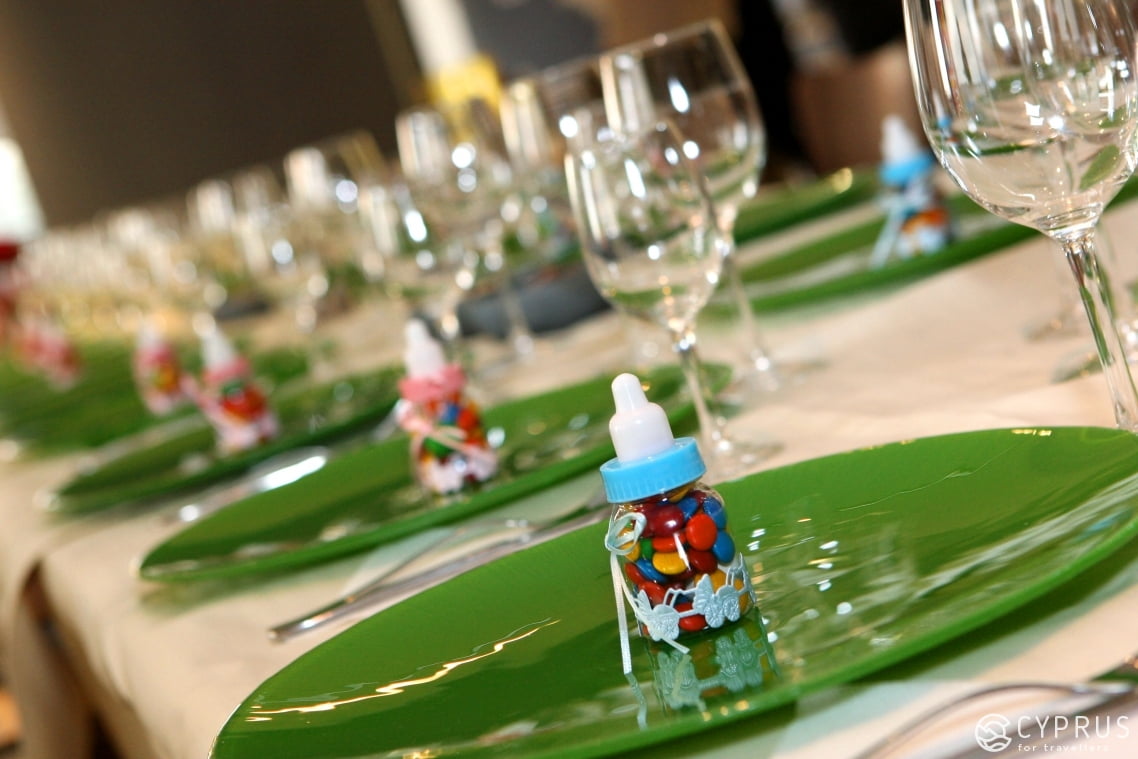
First of all, parents need to choose the church, where the baptism will take place. Then they choose the restaurant for the celebration. The next step is sending out invitations (some baptism parties draw in as many as 200 guests).
The next step is getting the godparents ready. They have to purchase baptism clothes, a large candle, a cross for the baby to wear as well as small crosses for everyone attending the ceremony. Among other things that have to be purchased are an oil jar, soap and a towel, which are kept with the priest. In some cases parents purchase souvenirs for the guests to remember the event.
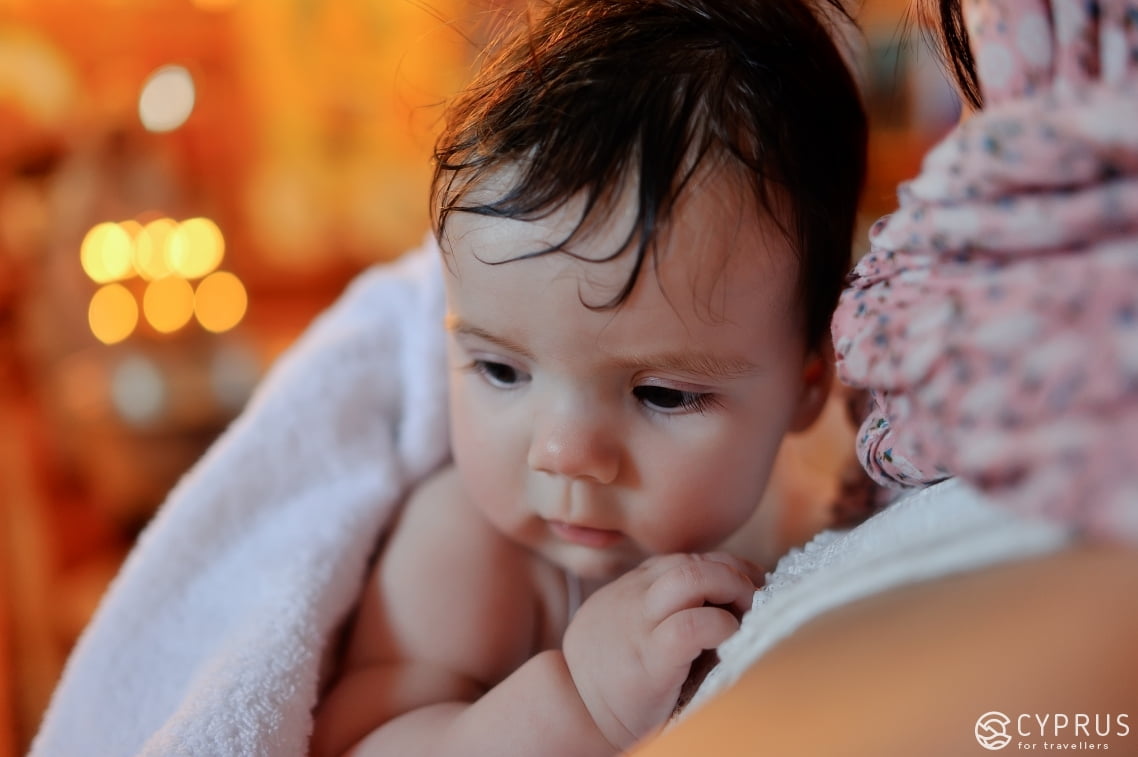
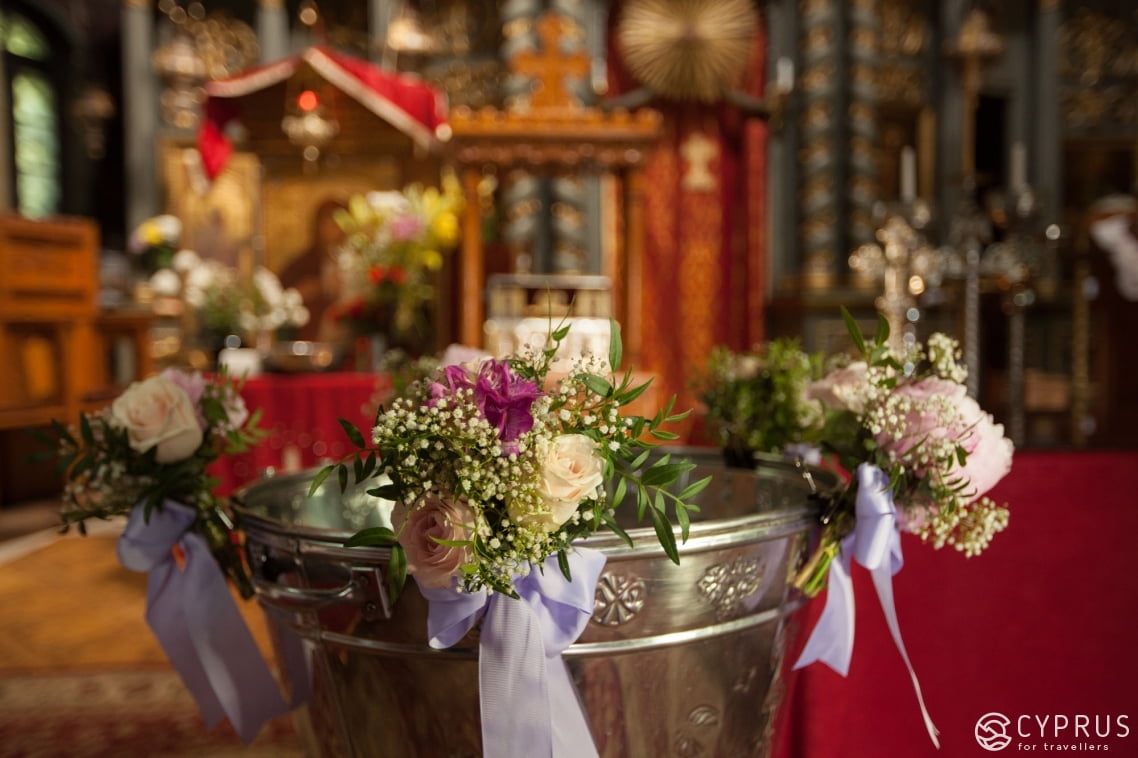
The ceremony takes place on a Sunday morning. Godparents stand next to the baptismal font holding the baby. A 10-12 year old child is asked to hold a candle. The godparents recite the «Symbol of Faith» prayer together with the priest, renouncing the devil three times and promising to obey the Ten Commandments. The priest then blesses the water and the baby is dipped into it three times. He then cuts a lock of hair from the baby’s head to signify his/her obedience to God. The baby is then anointed with special oil and dressed in a gown. The family and the guests all head to the restaurant to celebrate. Just like with other family celebrations, money is the most common gift to the parents.
The final part of the celebration takes place three days later (during this period the child is not washed and all of his/her clothes are kept neatly folded in a separate pile). At the end of the third day the parents host a dinner party for the child’s godparents. They have the honor of bathing the child and washing off the holy oil and his/her clothes. The baby usually receives many gifts on this day.
Congratulations on a baptism:
Happy Baptism! — Να σας ζήσει! (Nah sas zisi! Which translated verbatim means «Hope s/he survives!»)
Hope s/he brings you joy! — Να τον (τη) χαίρεστε! (Nah ton (ti) khereste!)
Always be virtuous! — Πάντα άξιος! (Panda axios!). This is usually what the godparents say.
Name days and birthdays in Cyprus
Name day (or Angel Day) is oftentimes more important than birthday in Cyprus. Birthdays obviously also mean a lot, but they are usually celebrated in a small family circle, whereas on name days Cypriots tend to receive congratulations from colleagues, friends and anyone who follows the religious calendar.
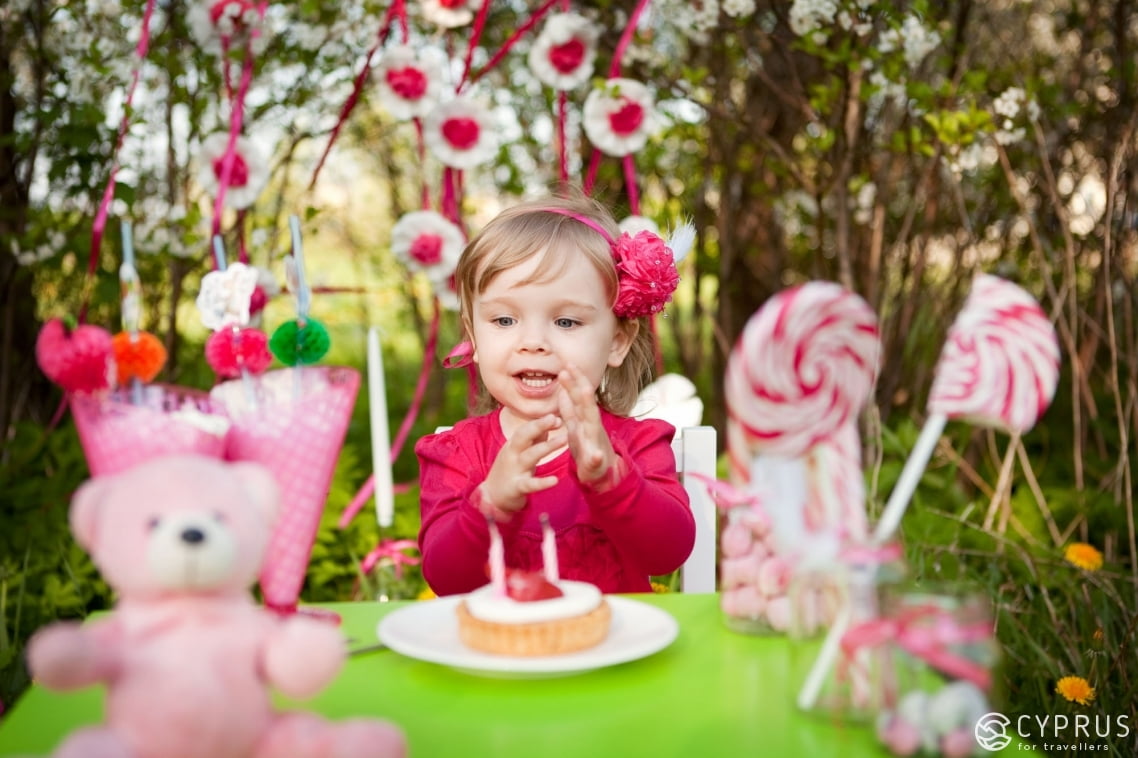
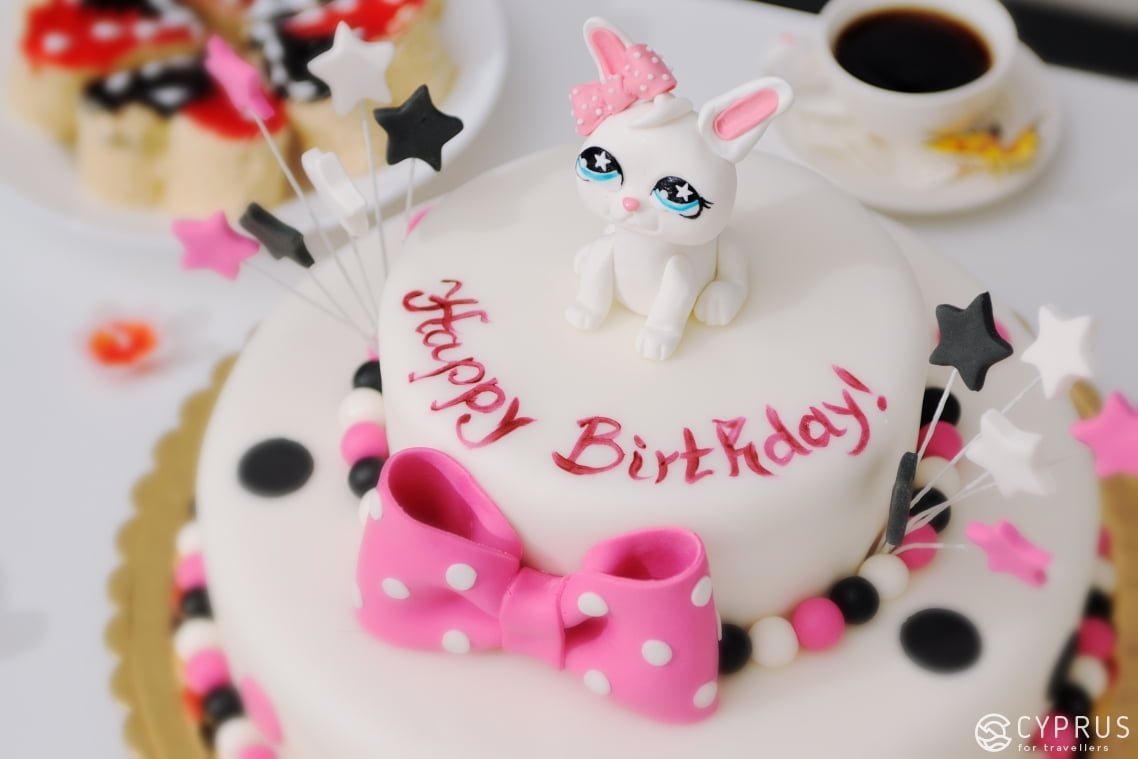
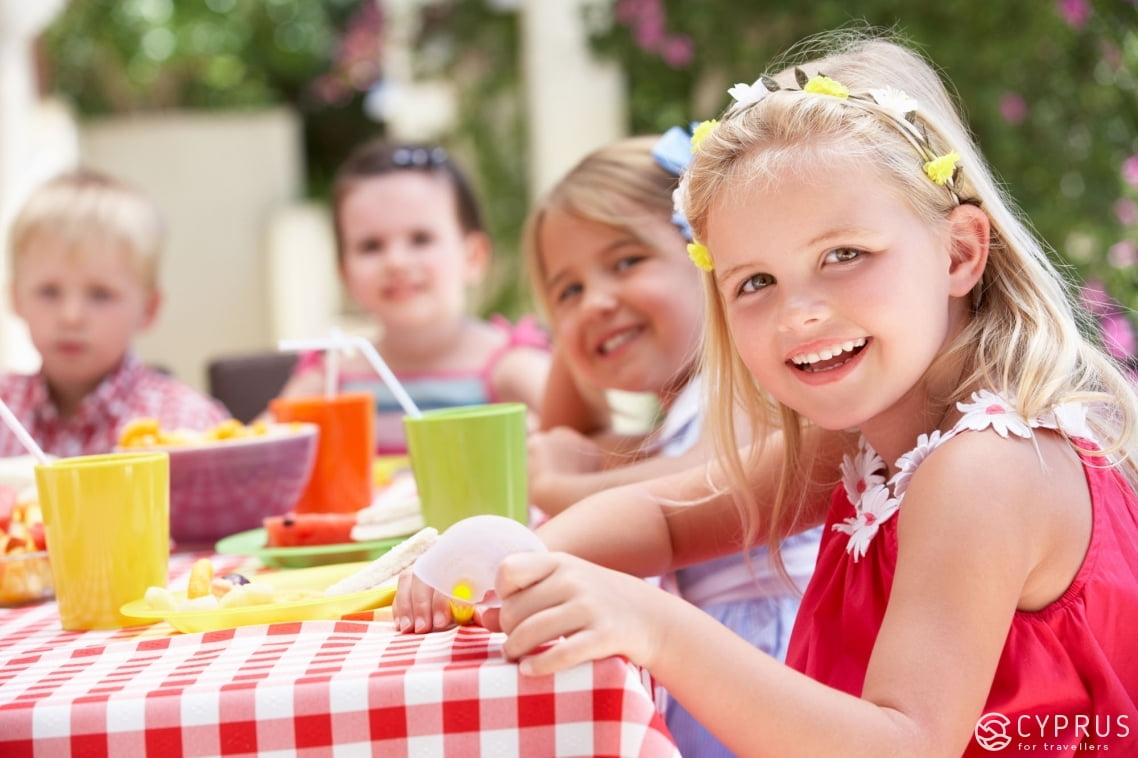
On their name days Cypriots like to host dinner parties and invite friends and relatives. Those who come to these parties usually bring small gifts. Cypriots, whose name is not in the religious calendar, celebrate their name day on the Feast of All Saints.
This, however, applies mostly to the older generation of Cypriots. The younger generation treats their birthdays and name days the same. Parents take part in organizing the dinner party, by inviting their child’s classmates, friends as well as their parents. The party is divided into two parts: one for adults and one for children. The former sit at their own table and socialize, while the latter spend time with party facilitators. At the end of the party there is a traditional birthday cake.
Congratulations quotes and wishes:
Happy birthday! — Χρόνια πολλά! (Khroniya pola!)
Live to a hundred years! — Να τα εκατοστήσεις! (na ta ekatostisis)
Wish you the very best! — Σου εύχομαι ό,τι καλύτερο! (sou efkhomeh oti calitero)
Wedding traditions
Wedding is one of the most extravagant and beloved holidays in Cyprus. It is full of rituals and traditions. It takes months and sometimes even a year to prepare for this event. During this time families have a chance to get to know each other better, while the bride and groom plan all the details of the most important day in their lives.
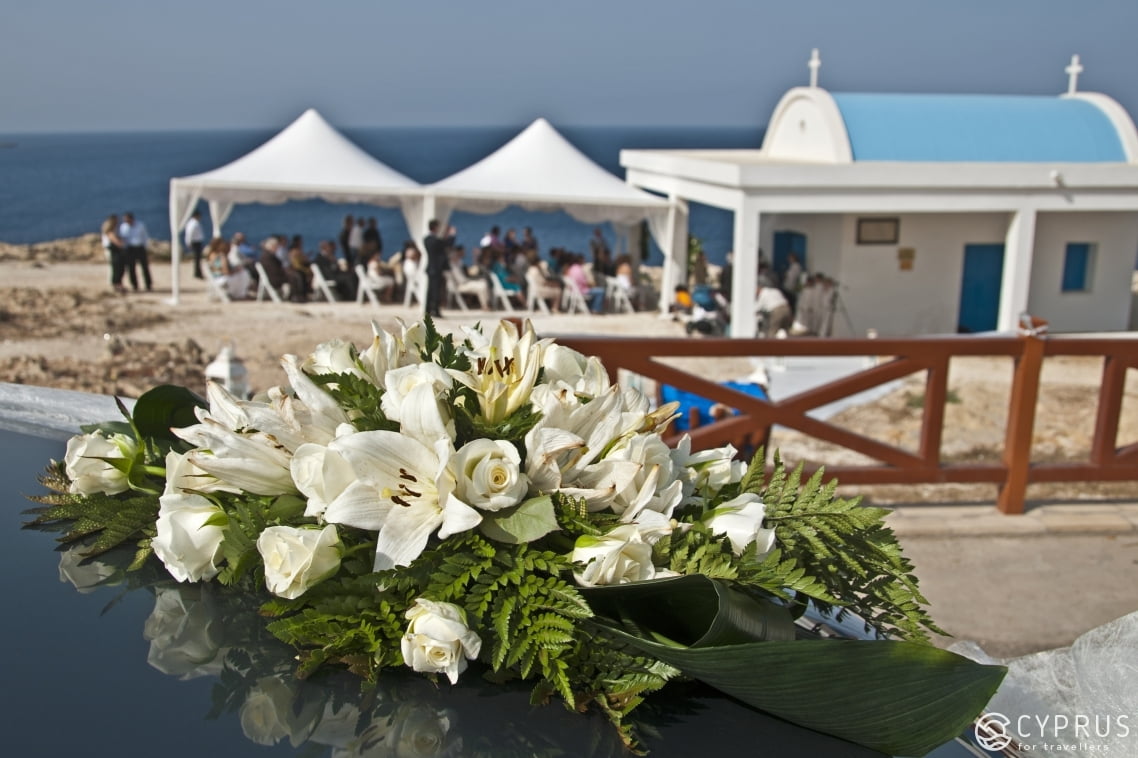
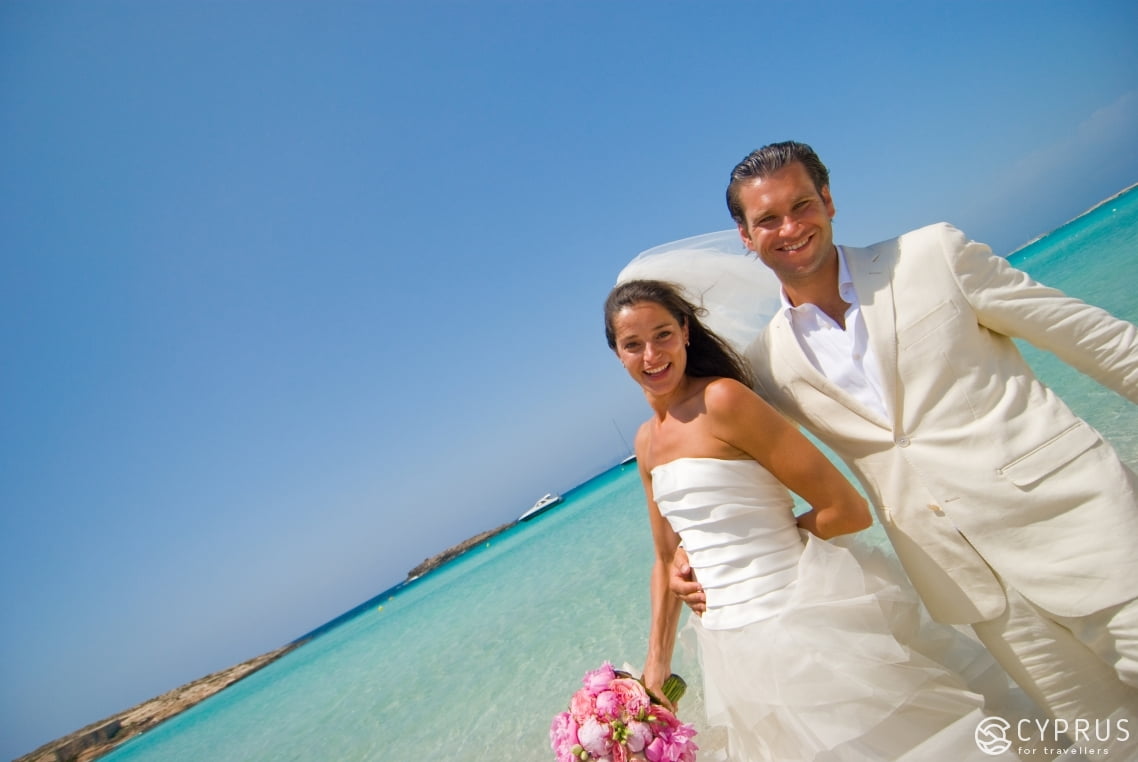
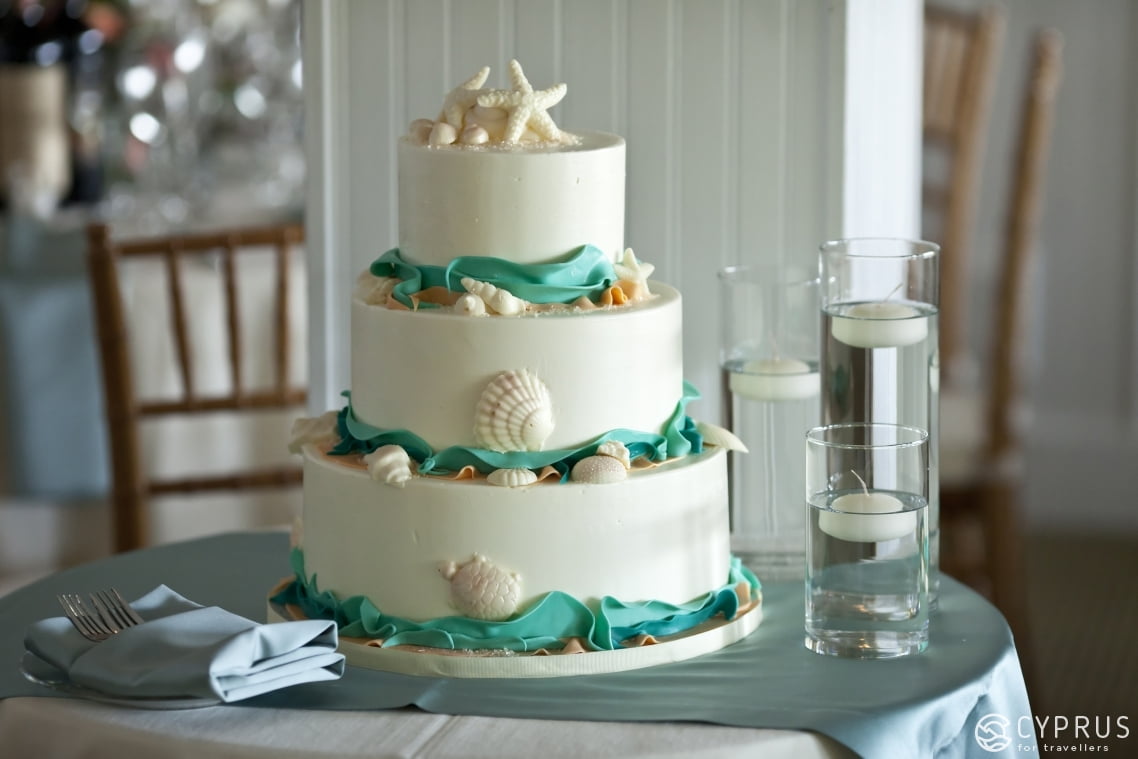
There is a tradition requiring children to jump on the bed of the bride and groom on the eve of the wedding day. They say that this attracts wealth and posterity into the new family. Another important tradition is shaving the groom before the wedding day. The process takes place inside his house and is accompanied by live music and singing of ritual songs.
The bride also receives her share of attention. After saying goodbye to her daughter, the mother of the bride ties a red scarf around her waist to protect from the evil eye.
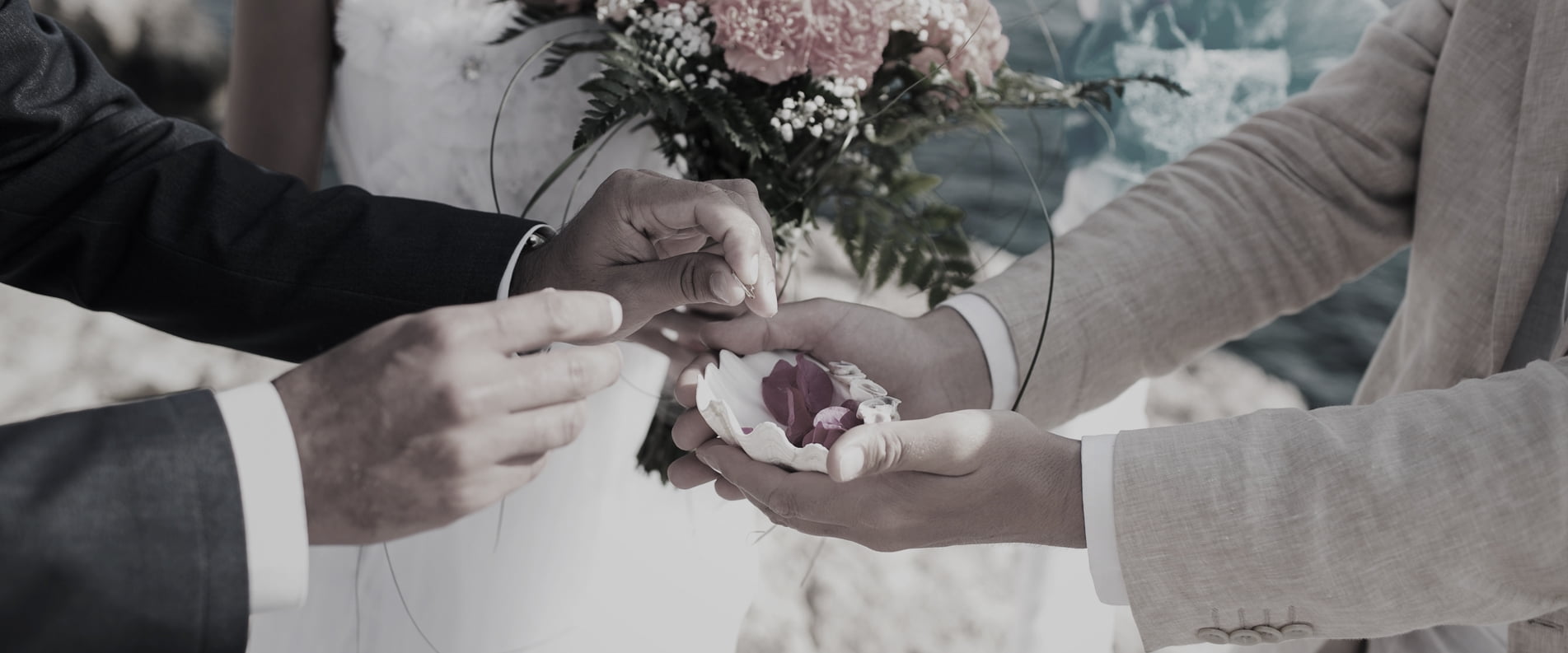
The actual ceremony begins with the bride and groom holding a pair of white candles that symbolize their willingness to accept God. After exchanging rings, the couple’s heads are covered with wreaths that are connected to each other with a silk ribbon that symbolizes unity. The two have to then take three sips from a cup of wine. Following this the priest walks them around the altar three times to signify his guidance into family life.
The actually celebration often lasts three days: from Saturday until Monday. The number of guests sometimes reaches two thousand (invitations are sometimes printed in local newspapers for anyone wishing to congratulate the couple and attend the party).
Money is the most common gift and goes towards the couple’s purchase of a new home.
Music can be heard playing during all of the three days of celebration and there is a lot of dancing. According to Cypriot tradition, before the couple does their first dance, friends and family have to pin money on their clothes. Ideally, there should be so much money that you can’t see anything through it. Another important and popular dance is called Kalamatianos, where guests hold hands and dance in a circle with a counterclockwise rotation.
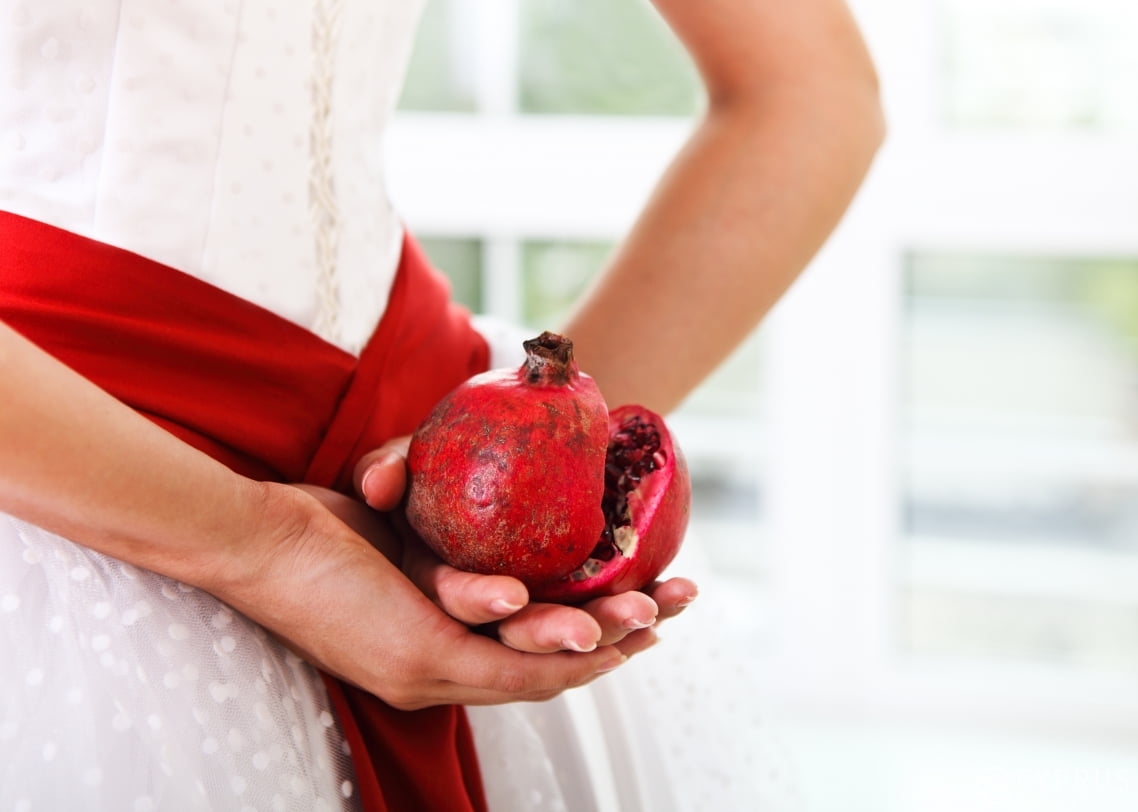
There is no tradition for throwing the bouquet. Instead the bride throws a ripe pomegranate, whose seeds symbolize fertility and the number of pieces that it can be divided into stands for the number of future children.
Sometimes the bride’s girlfriends write their names on the soles of her shoes. There is a belief that the girl whose name is almost wiped off towards the end of the event is most likely to get married next.
Congratulations quotes:
Congratulations on your wedding! — Συγχαρητήρια για το γάμο σας! — (Sinkharitirya yato gamos sas!)
Happe wedding! — Ευτυχισμένο το γάμο! — (Eftikhismeno to gamo!)