
Good news, vegetarians! Cypriot cuisine that boasts a great number of meat dishes, also has delicious options for vegetarians.
Just like in many other Mediterranean countries, meat used to beserved main during holidays. During the rest of the time people ate vegetables, grains and legumes.
Our «guest» for today is Colocasia esculenta, also known as taro — a plant that is thought to be native to Southern Asia. Taro corms grow to to be up to 8cm in diameter and weigh up to 3-4 kg. Taro will most likely remind our readers in the north of turnip (provided they have tried it).
It is thought that taro is good for those who perform a lot of physical activities, because it has a lot of calories (112 per 100 grams) and it very nutritous. The polysaccharides found in taro (amylose and amylopectin) together with fiber help to raise blood sugar levels.
So don’t forget to taste taro when you come to Cyprus. There is even a festival dedicated to this vegetable that takes place in the village of Sotyra (Famargusta region) every fall.
When you shop for taro, make sure to avoid the ones with cracks or any other visible damages.
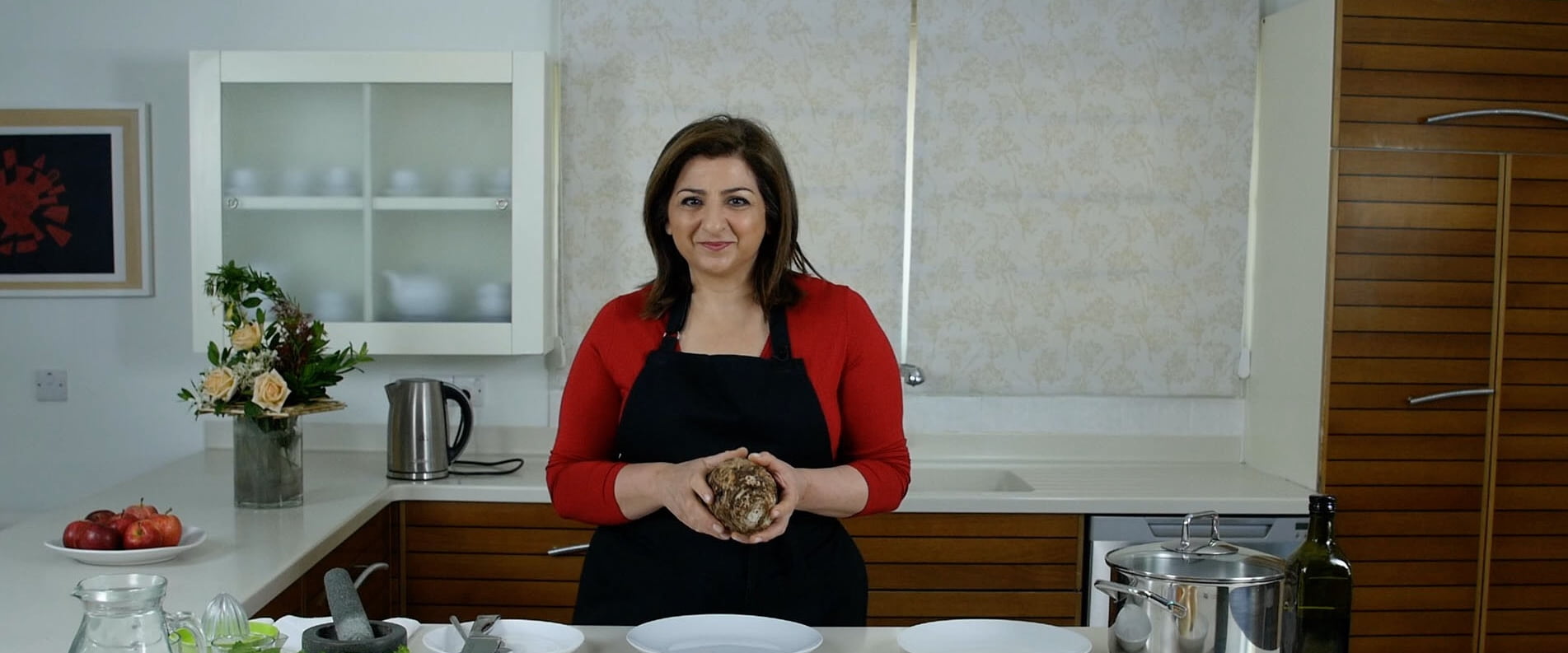
If you want to learn how to cook taro, our culinary expert Marilena Joannides has the perfect recipe for you:
Recipes
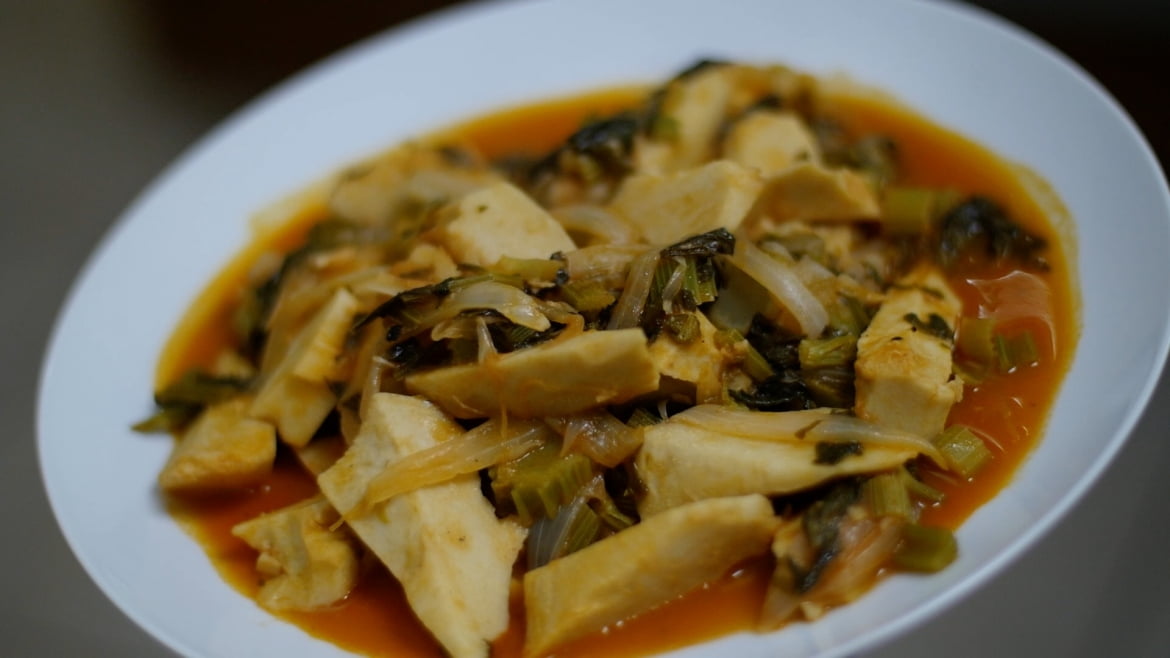
Kolokasi with celery and tomatoes
Vegetarian dish of Cypriot cuisine
Ingredients
Taro — 1 kg
Onion — 1
Celery — 3-4 sticks
Olive oil — ¼ cup
Water — 2 cups
Tomato paste — 2 tablespoons
Salt and pepper — to taste
Lemon or sour orange juice
Cooking method
Peel the taro (no need to wash it). Chop off medium-size pieces starting from the center of the vegetable. If you cut up your taro the regular way and not the way that is shown in the video, it will be all mooshed out of shape during cooking.
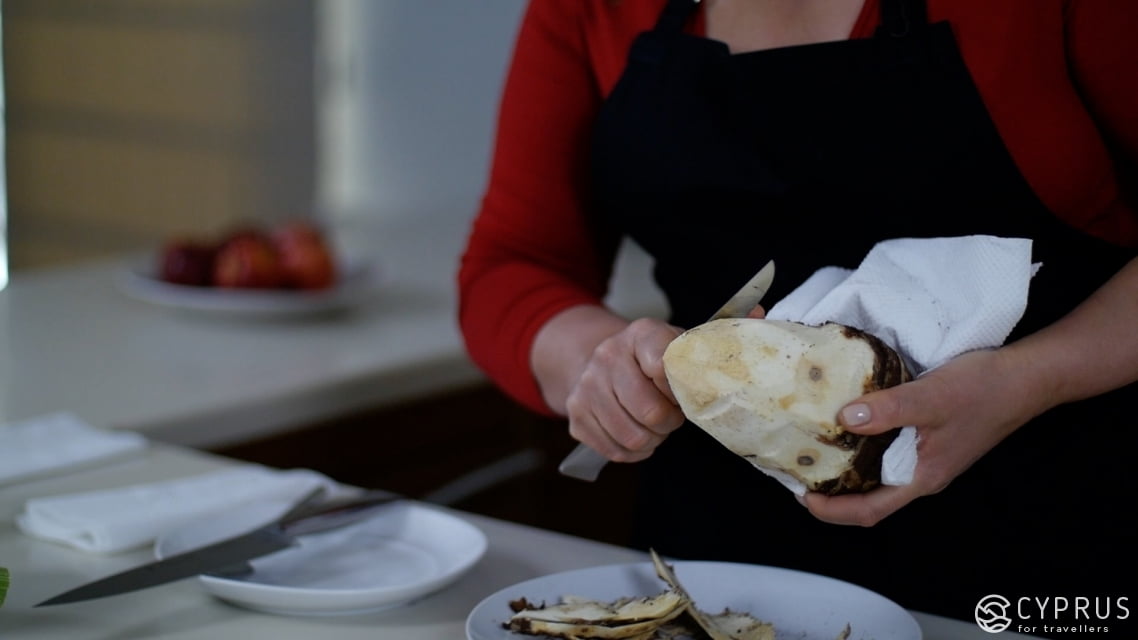
In a frying pan, heat up olive oil and lightly simmer the onion. Add taro, celery and simmer for 2-3 minutes.
In a saucepan mix tomato paste with water and add salt and pepper.
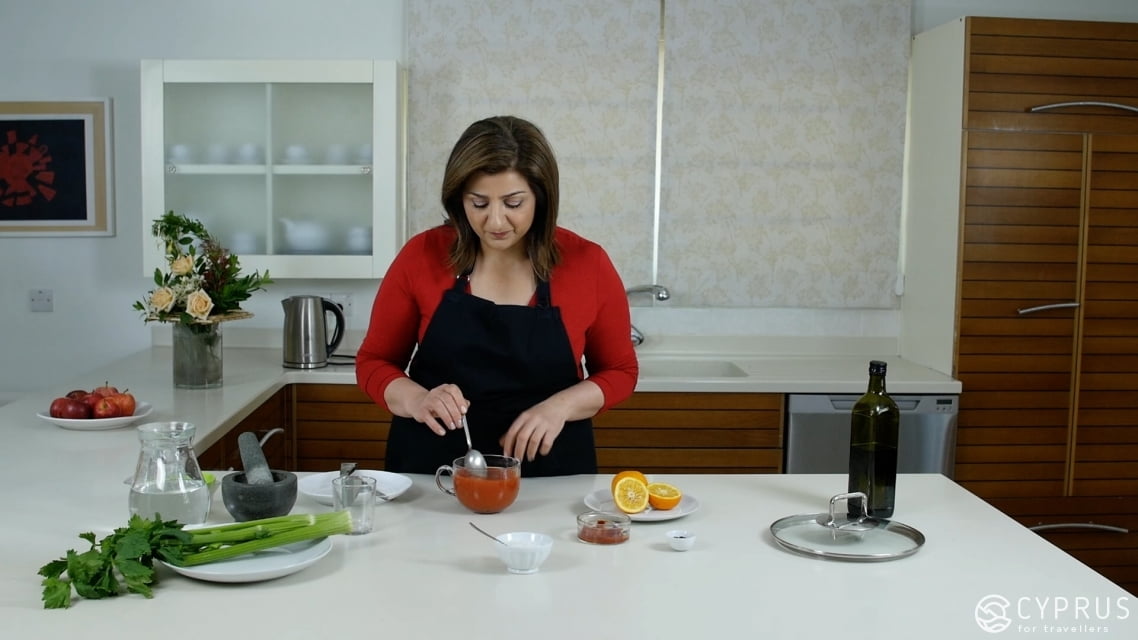
Then add the vegetables and cook over medium heat for 20 minutes.
Add lemon or wild orange juice and cook for another 5-10 minutes until the taro is soft and the sauce thickens.
The dish can be served either hot or cold.
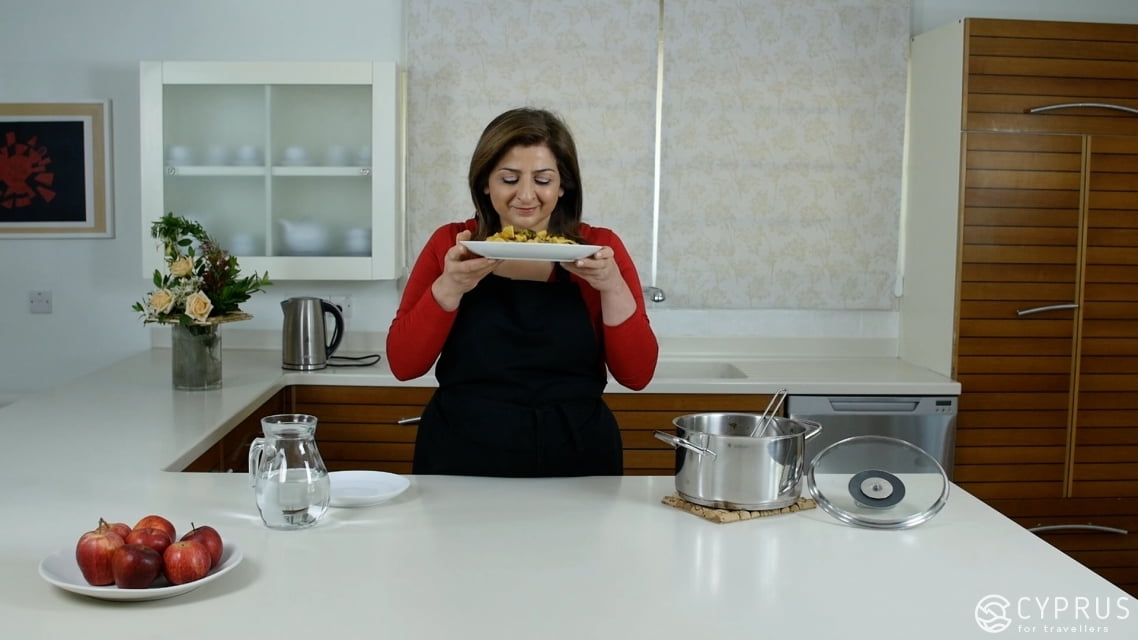
Recipe by Marilena Joannides.
Enjoy your meal!
Written by Evgeniya Kondakova-Theodorou.