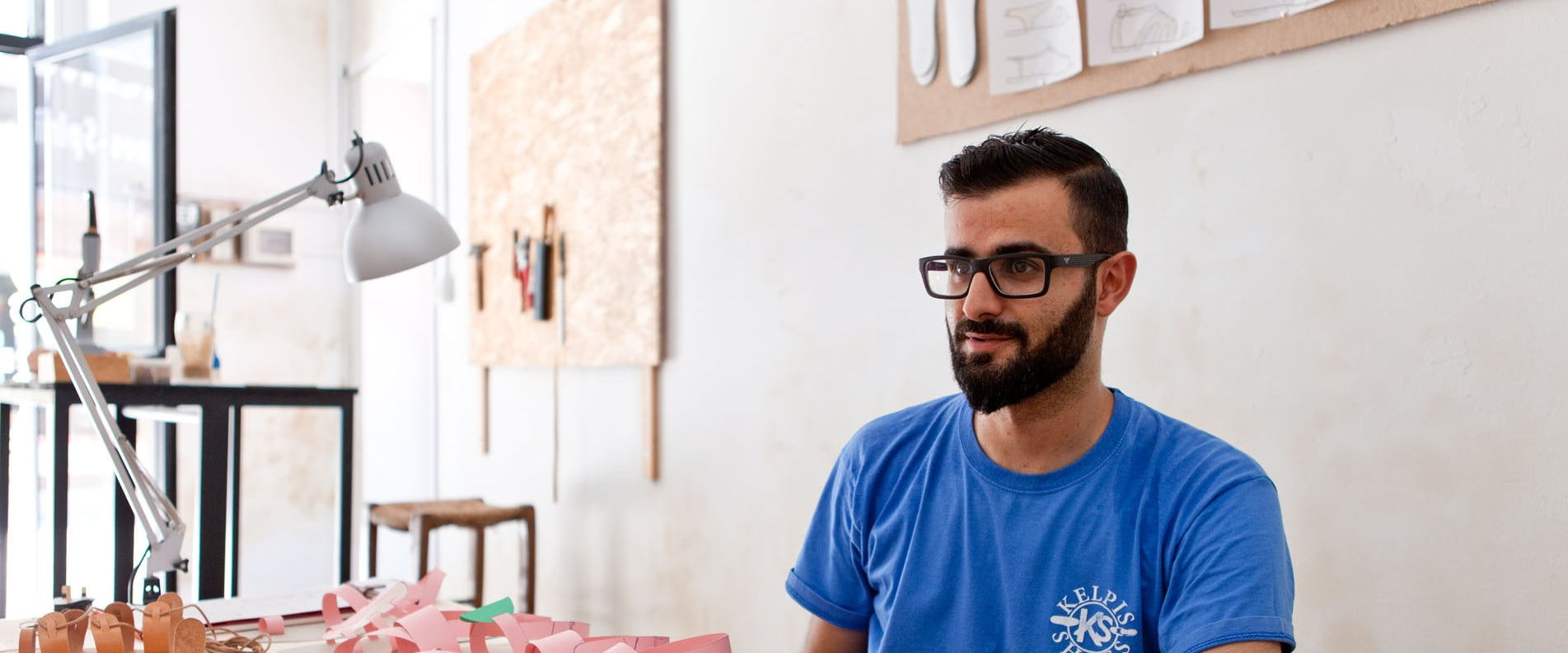

We continue our series of interviews with Cypriot craftsmen who preserve as well as breathe in new life into this country’s ancient traditions and professions.
Today we meet with a footwear and accessories designer, a leather worker who not only runs a family business, but also knows the kind of shoes preferred by Elizabeth Taylor, Richard Barton, Rod Stewart, Roger Moore, Princess Diane and many other royal personalities.
Kelpis Shoes was established by Myrianthis Kelpis in 1972 on Fulham Road in London. Kelpis was a native of Mesogi village in the Paphos District. Shortly after arriving in Britain to find work, Kelpis opened his own leather-making studio in 1962. Ten years later he started working at a leather factory to learn more about mass production of footwear.
His brand brought him great popularity and high-profile clients, such as members of the royal family, Hollywood stars and famous musicians. His brand is also well known back in Cyprus, where his son, Giorgos Klepis, continues his business and caters to local celebrities and clients, who prefer to have their footwear custom-made.
Klepis Jr. is a graduate of Polimoda fashion school in Florence, Italy.
— Giorgios, your line of work is currently going through a tough time. Can you tell us more about the way things used to be before?
— It is a very old craft: 100-200 years ago each village used to have its own shoemaker, the one who made shoes for everyone. He would make boots and shoes for all of the adults and children in the village. Although people didn’t use to order shoes as frequently as they do now: only about a pair each year, which they usually bought around Christmas or Easter.
Later with the advance of new technologies and the development of leather manufacturing processes, the situation changed: people slowly stopped going to their local shoemaker. Instead they opted for a less expensive, factory-made pair of shoes that were available for immediate purchase. Prior to that when people ordered handmade shoes, they had to wait after the shoemaker took their measures and created a so-to-speak tester pattern to see how everything fits and feels. This tester would later be simply thrown away.
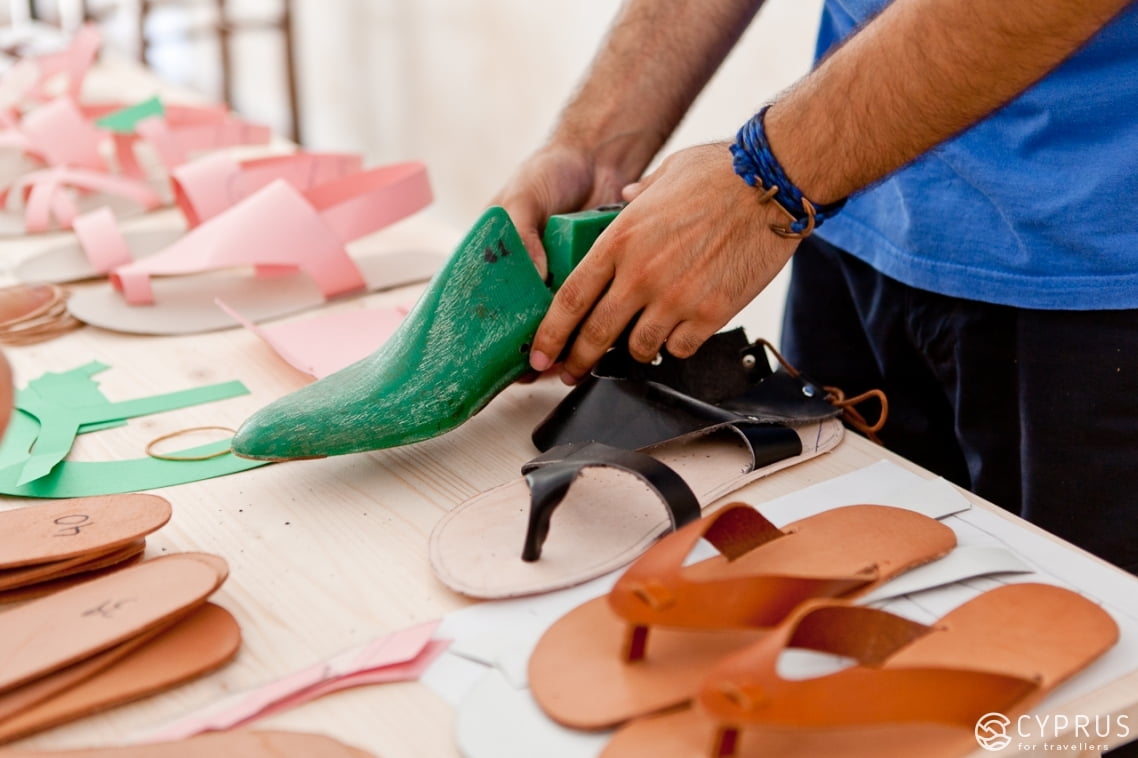
My studio has many different lasts — standard tools used in the manufacture of shoes of all kinds. They used to be made of wood, but nowadays I only use plastic ones.
— It is no secret that no two people are alike. The same can be said about our feet. What does a footwear designer have to do when his or her client has unusual measurements or requests?
— We are all different, of course. When the client comes, the shoemaker needs to take first measurements. If the shape of the foot is not standard, we take note of that and make appropriate adjustments to the shoe at the final stage of work. Just before we finish making the shoe, we invite our client to try it out. By the way, even factories are supposed to allow the client to adjust the shape of the shoe (e.g. make it more round or rectangular), even though most of the time they follow a set pattern.
— Is the leather you use local or foreign?
— Some of it is local, the rest is from Germany, Italy and Britain. The most expensive leather is from Italy.
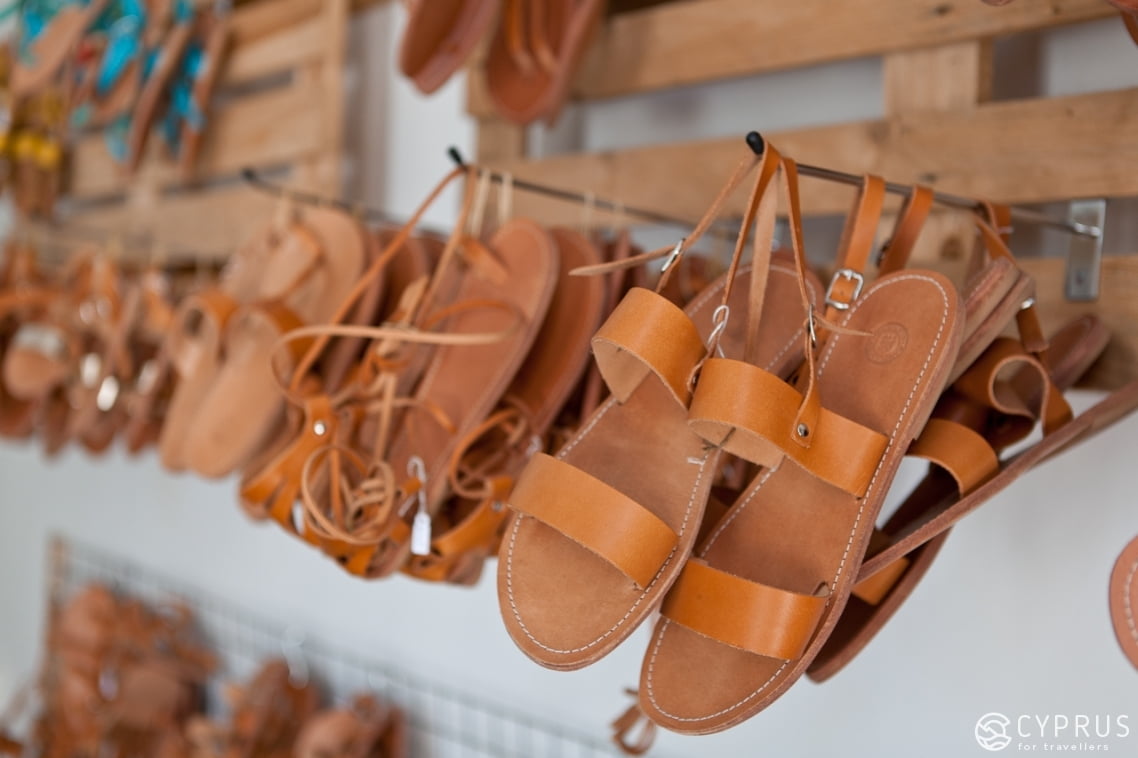
— We are inside The Place right now and I can see that you mostly work on sandals here.
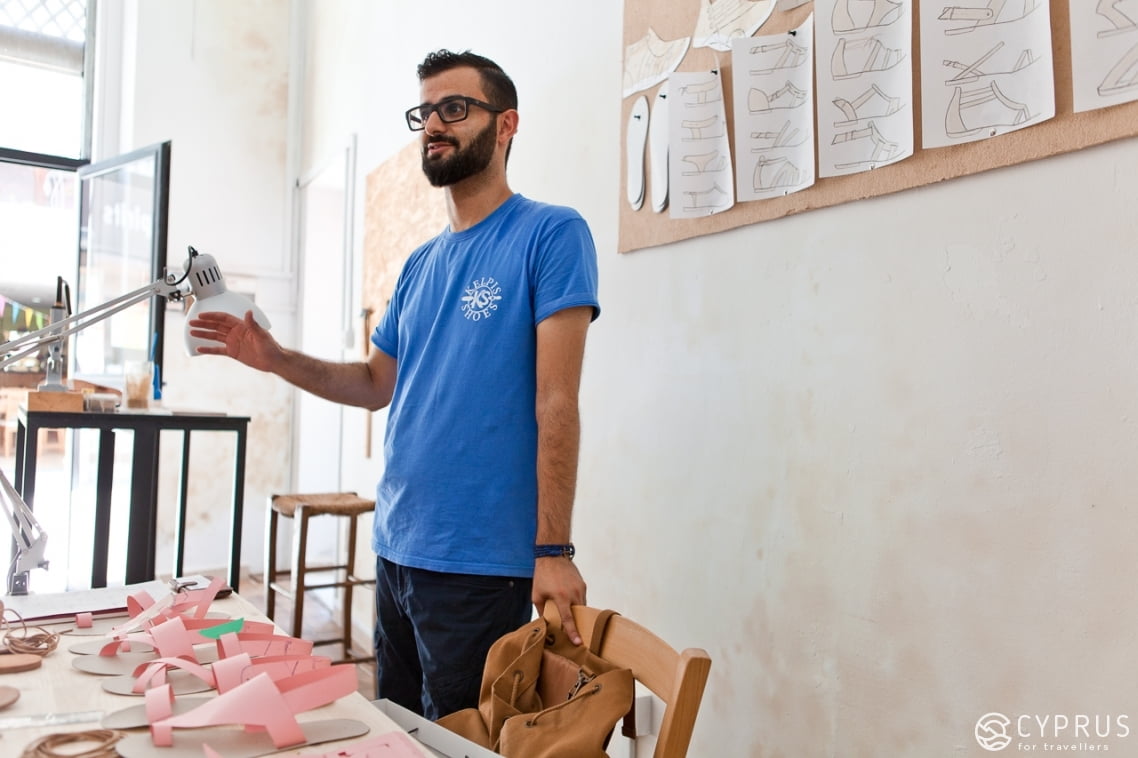
— That’s true: I only work on sandals here: first I create a sketch and create the pattern pieces on paper. Then I attach the uppers to the soles of the future sandals and get a so-called CD model. I piece everything together like a puzzle and then our tester shoe is ready for its first fitting.
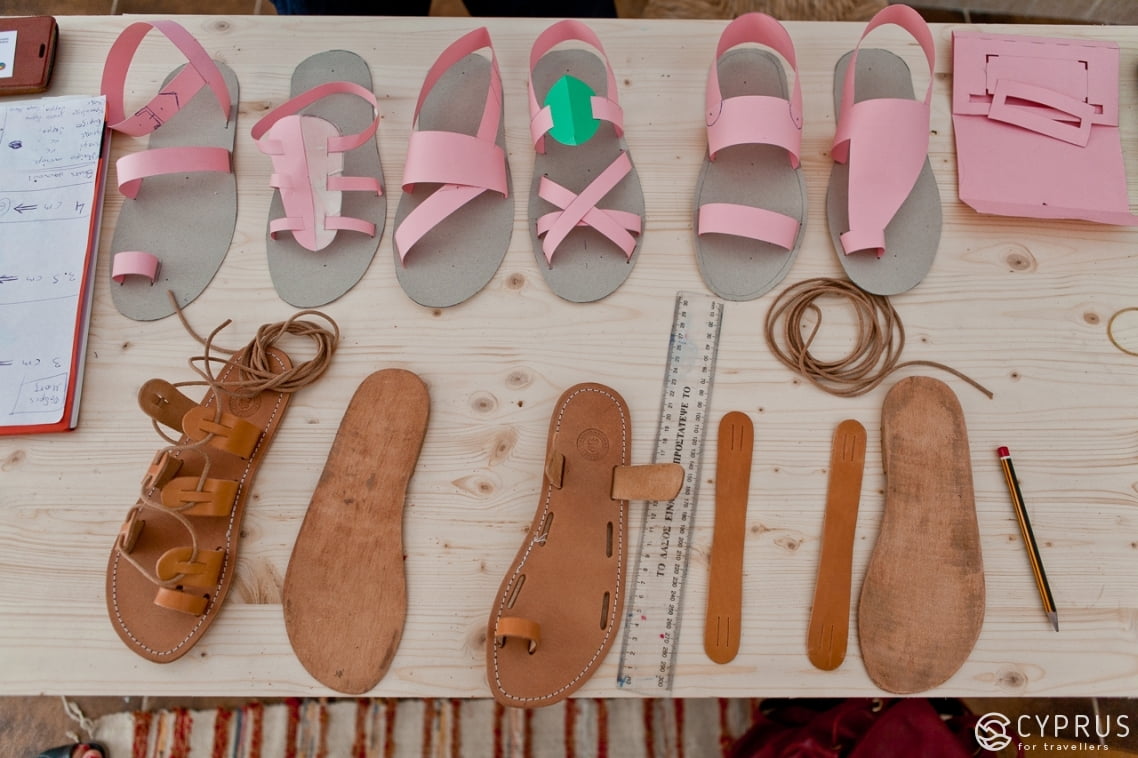
Together with the client we discuss what needs to be changed and choose the color and the detailing. By the way, of the five clients that try on new sandals I know that only two or three will find the shoe to fit perfectly. Some clients bring drawings of their future shoes. I offer an individual approach to manufacturing summer shoes.
— Not so long ago we also met with potter Costas Hadjigeorgiou, who told us about his work with the young generation of Cypriots. Do you have apprentices?
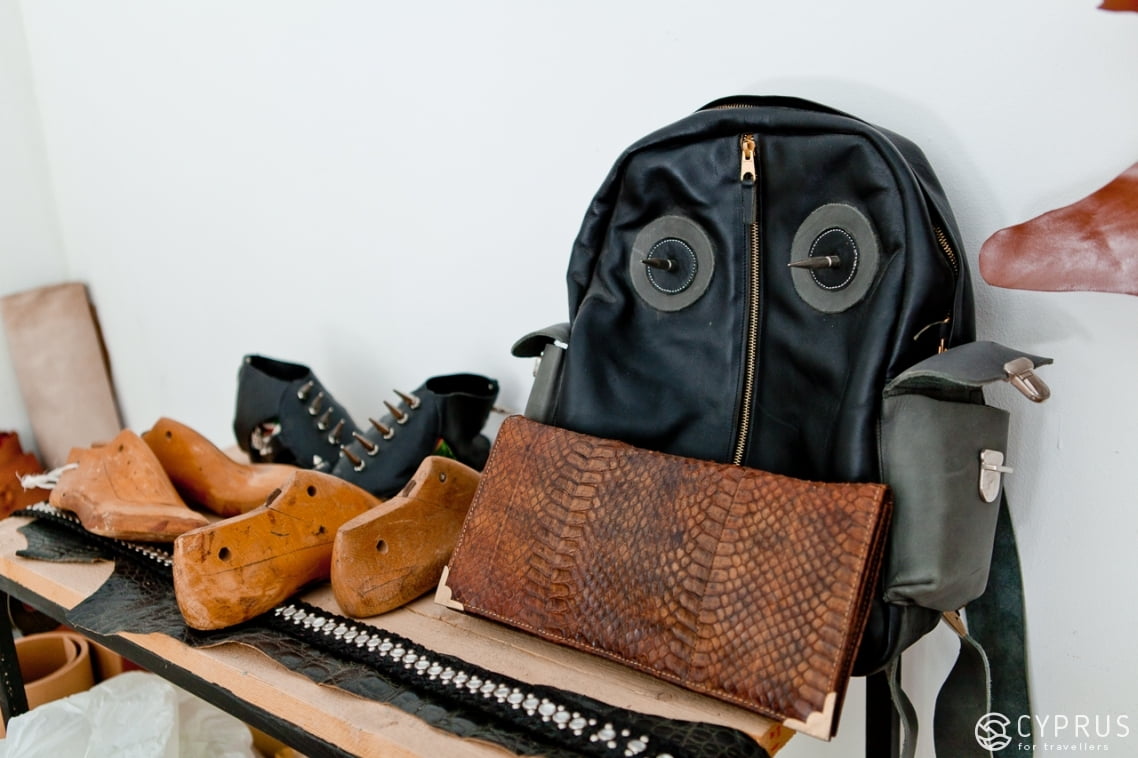
— No, because they don’t know anything about the technology and the nuances of this process (laughs). On a serious note, I do have young people come to me, most of whom are art and fashion students. After spending 3-4 years mastering the basics of the job at school, they come here to gain experience. Here on the shelf are some daring examples of a punk style pair of boots and a backpack.
— So you not only make shoes, but also accessories…
— Yes, for example we make belts and tobacco pouches, which many Cypriots love. We can use all types of soft leather to make it, including suede.
— What about women’s bags? This is the first thing that a woman is likely to be interested in after buying a pair of shoes.
— This is a bit more complicated. It takes more time to design a bag. However, if the client has his or her own ideas, drawings and even leather, then why not?
— Giorgios, I have noticed that you have a few samples of exotic leather on your wall. Are those reptiles?
— Yes, I placed them here for educational purposes. Students (as well as visitors) can touch and feel how they differ from other types of leather. For example, snakeskin is much lighter than alligator skin. All these types of leather have a unique texture that is perfect for a specific purpose and design.
Many people who first come to my studio get thrown off when they see them.
— I see. What challenges do shoemakers now face in light of modern concerns regarding animal welfare and the environment (particularly when it comes to exotic types of leather)?
— You need a special license (Cites certificate) to purchase this kind of leather. The license regulates their quantity and other important factors. There are entire companies who own private breeding farms that specialize in this type of animals. Exotic leather is mostly used to make bags and classic shoes.
By the way, have a look at this popular trend among leather makers. This is plain sheep or cow leather (which is significantly cheaper than its exotic equivalent) that was stylized to imitate exotic leather (most often alligator).
So essentially you can use modern technologies to dye and stylize your leather to reach any desired effect. These “imitations” are mostly used in belts and shoes.
— What is the future of your line of work?
— I think it will be something totally different from what we have now. 10 or 15 years ago there were many small-scale leather manufacturers.
Over the last couple of decades, most of the old masters have aged and few young ones have come to replace them. Many leather studios and factories have shut down. The crisis has led many customers to opt for cheaper alternatives, whichusually means worse quality and less comfort.
Lastly, Giorgios Kelpis gave us some useful advice:
- Good quality shoes must have a leather upper part and a sole made of either leather or rubber (rubber is usually more flexible and comfortable, but can become less comfortable with time). This will allow your feet to «breathe».
- Modern technology lets you create an artificial equivalent of leather, which is great! But if we are talking about shoes, and not bags or clothes, then keep in mind that authentic leather will last longer. All of the wear and tear is easier to manage if your shoes are made of real leather. When it comes to manmade leather, cracks and scratches can prove «fatal».
- Avoid purchasing shoes that have a plastic or manmade sole: it is highly unsanitary.
- When you try on a new pair of shoes, you should expect to feel as comfortable in them as you wish to be later. Narrow shoes might cause you problems in the future, especially if you intend to wear them for long periods of time during the day.
- Some types of shoes have special shock-absorbing soles (can be recognized thanks to their soft cushions) with a hard frame. Unlike their flat equivalent, these soles provide orthopedic support and preserve the original shape of the shoe.
-
We thank Giorgios and invite you to visit his studio located at 56 Constantinou Kanari.
Stay tuned for our upcoming meetings with other craftsmen from Cyprus.
See you soon!